
The transplant journey
Dialysis keeps people alive. Our mission is to walk them further — toward transplant.
94 in 100 patients depend on the chair for life. Only 2 in 100 ever reach the cure. That gap is the mission.
94 in 100 patients depend on the chair for life. Only 2 in 100 ever reach the cure. That gap is the mission.
Our clinical leadership comes from a US Fresenius regional operation in Texas — protocols, training, and quality systems carried over intact.
Around it sits a dedicated social-services and clinical team built for one job: transitioning patients onto the transplant pathway, step by step.
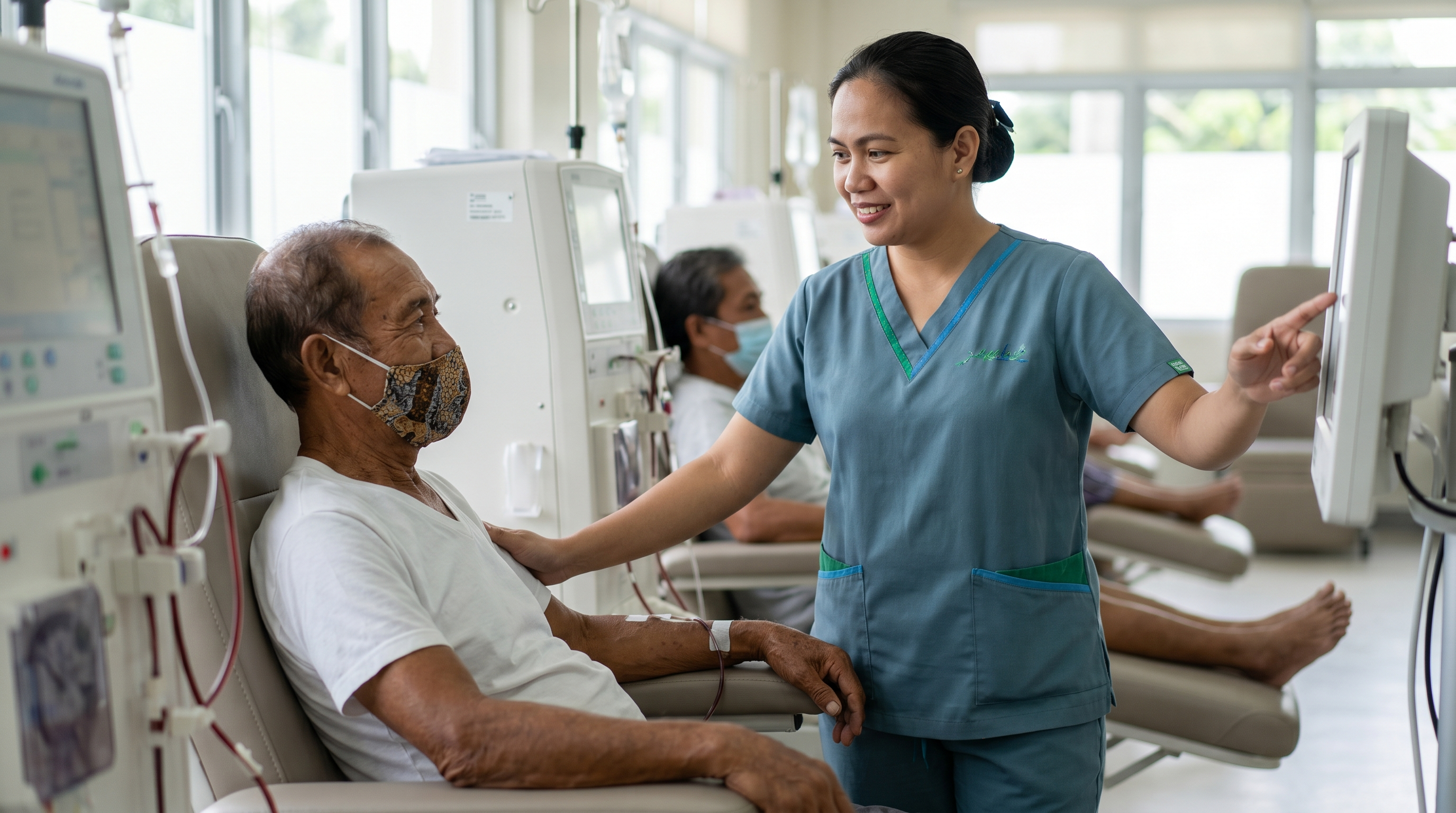
Since 2024, PhilHealth covers standard hemodialysis in full — ₱6,350 a session, three sessions a week. What still pushes Filipino patients off treatment is everything the package doesn't touch: the fare to the center, food on dialysis days, the medicines between sessions. That gap is what GSGO — Good Samaritan Global Outreach, a 501(c)(3) nonprofit based in Texas, USA — exists to close.
GSGO — headquartered in Texas, with operations in the Philippines — is the welfare arm of the ecosystem; Renovia RenalCare Network is its delivery partner. Renovia builds the capacity: centers, machines, water, people. GSGO funds the access: verified-indigent patients at every partner center, supported month after month so that no one stops treatment because of a jeepney fare.
The model is as disciplined as it is warm. Medicines are paid pharmacy-direct — never cash. Transport and food are credited to the patient's mobile wallet against verified attendance at the chair. Every peso is traceable from donor to patient, and every patient is verified by social workers using objective indigency criteria.
And the vision runs further than the chair. GSGO walks patients toward the cure — funding transplant work-ups, subsidizing the anti-rejection medicines that PhilHealth's package doesn't sustain, and standing behind the living kidney donors who make the gift possible. Because kidney failure is not the end of the road — it is the beginning of the way back to life.
Maintenance medicines, fare for 13 trips a month, and food on dialysis days — the small recurring costs that decide whether treatment continues.
An emergency line for the weeks that go wrong — hospitalization and vascular-access procedures, settled provider-direct, up to ₱250,000 per event.
Work-up, listing, surgery support — and subsidized anti-rejection medicines after, so the cure stays the cure for the patients who reach it.
Screening, work-up, and recovery support for living donors — honoring the person who gives the gift, not just the one who receives it.
Why "Renovia"
A Philippines where kidney failure is no longer the end of the road, but the way back to life.